Fly Tying Tool Kit Explained: A UK Buyer's Guide
TL;DR / Quick Summary:
A fly tying tool kit is a curated collection of bench tools—typically comprising a vise, ceramic bobbin holder, micro-serrated scissors, whip finisher, hackle pliers, and bodkin needle—used to wrap thread and natural materials onto hook shanks. Purchasing a complete kit ensures tool compatibility, prevents fine thread shearing, and offers up to 35% savings over buying individual components.
Key Takeaways
- Core Components: A complete fly tying tool kit must include a high-friction vise, bobbin holder with ceramic inserts, whip finisher, micro-serrated scissors, hackle pliers, and a bodkin needle.
- Vise Mechanics: True 360-degree inline rotary capability drastically improves speed, material symmetry, and thread control across both micro dry flies and large streamer dressings.
- Ceramic Tube Priority: Smooth ceramic inserts in bobbin tubes eliminate thread shearing on fine 8/0 and 14/0 threads—essential when tying delicate UK chalkstream patterns.
- UK Fishery Compliance: Crafting your own patterns enables strict adherence to UK Environment Agency non-toxic weight mandates and local catch-and-release rules using custom barbless hooks.
- Value Engineering: Purchasing a curated 6-piece tool bundle with a pedestal or C-clamp vise saves up to 35% compared to sourcing individual component tools separately.
A fly tying tool kit is a specialized collection of bench instruments—including a fly tying vise, ceramic bobbin holder, micro-serrated scissors, whip finisher, hackle pliers, and a bodkin needle—designed to securely clamp fishing hooks and accurately wrap materials like feathers, fur, and thread into lifelike artificial flies. Tying your own flies is one of the most rewarding pursuits in UK game angling. Based on our extensive bench testing at Nottest Angling, whether you are replicating the delicate April Dun for a crisp morning on the River Test, winding heavy epoxy buzzers for Rutland Water, or dressing classic salmon tubes for the River Spey, your success on the water hinges directly on the precision and quality of your bench tools. For instance, a loose hook grip, a rough bobbin tube that shreds fine silk, or slipping hackle pliers can instantly turn an enjoyable tying session into an exercise in frustration.
For British anglers looking to transition from buying commercial patterns to dressing custom flies, selecting the right fly tying tool kit is the foundational first step. Consequently, this guide breaks down every critical component, evaluates mechanical vice configurations, aligns tool specifications with UK target species, and provides practical bench setup advice to ensure your hand-tied dressings withstand hundreds of aggressive takes.
What Is Included in a Quality Fly Tying Tool Kit?
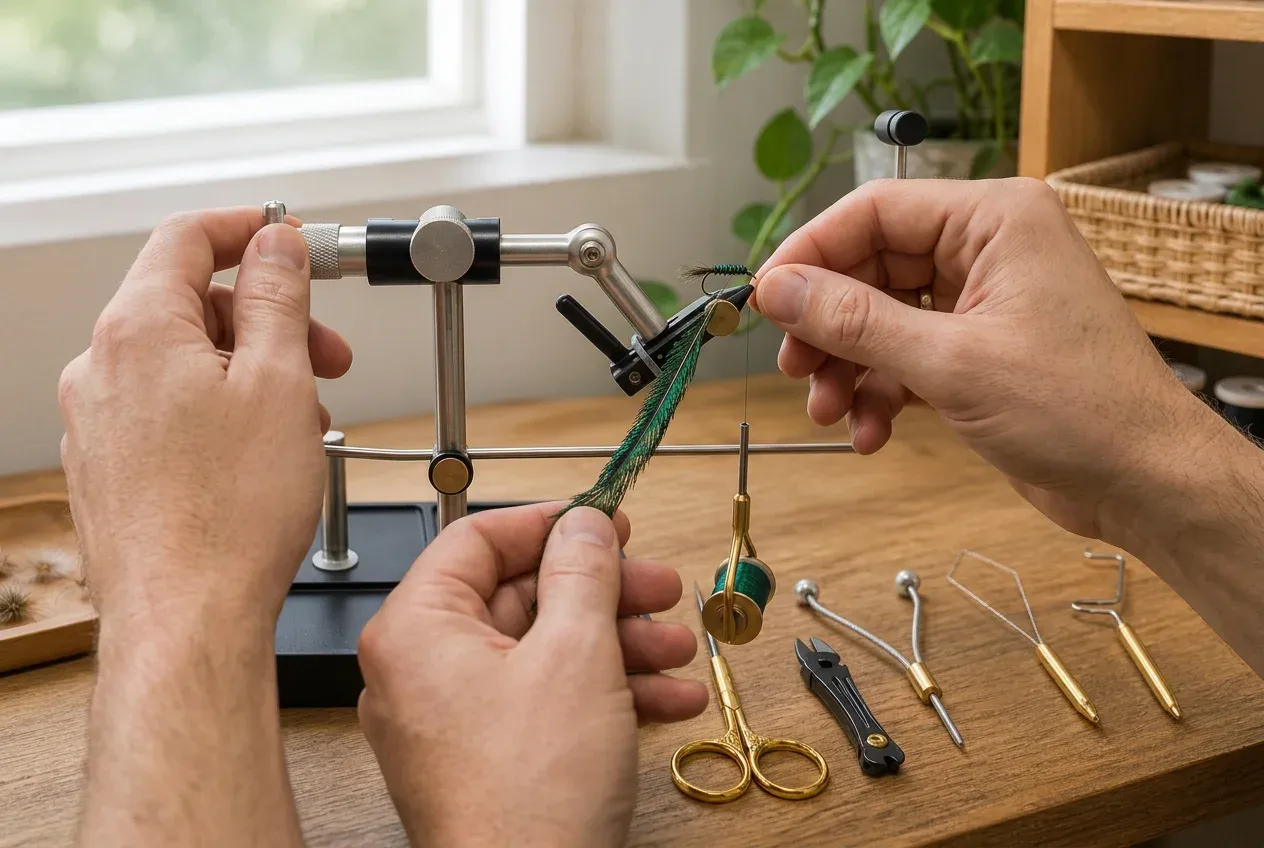
A comprehensive fly tying tool kit consolidates the core mechanical instruments required to bind natural feathers, furs, synthetic tinsels, and threads onto a steel hook shank. While specialized tools exist for advanced techniques, an effective bench kit must execute six fundamental tasks with total repeatability.
1. The Fly Tying Vise (Vice)
The vise is the central anchor of your bench station. Its sole objective is to clamp the hook firmly in place without slippage or jaw deformation under high thread tension. Quality vises feature hardened tool steel jaws capable of gripping hook sizes ranging from miniature #24 midges up to heavy-wire #2/0 streamer and saltwater hooks. Furthermore, advanced designs feature full 360-degree inline rotation, allowing the tyer to spin the hook along its axis to inspect all angles and wrap materials evenly.
2. Bobbin Holder
The bobbin holder maintains constant spring tension on your thread spool while feeding the thread down a narrow tube toward the hook shank. Based on our bench testing, the critical quality indicator here is the tube tip. Entry-level steel tubes often develop invisible burrs that sever fine tying thread (such as 8/0 or 12/0 silk). Superior kits incorporate smooth ceramic inserts or high-grade polished carbide lining at both ends of the tube to guarantee friction-free thread delivery.
3. Whip Finisher
While hand-knitting half-hitches is possible, a dedicated whip finisher creates neat, durable head knots that will not unravel under water pressure. The classic Matarelli-style spring wire finisher allows precise control over thread loops, sliding cleanly off the finished head once tension is applied and securing the tie-off with surgical exactness.
4. Hackle Pliers
Wrapping delicate dry fly hackles, palmered ribs, or fragile peacock herl requires controlled spring tension. Quality hackle pliers feature brass or stainless steel construction with smooth, non-slip rubber or textured metal pads. Consequently, they grip feather tips firmly without severing the fragile central quill while you wrap around the hook shank.
5. Micro-Serrated Tying Scissors
Standard household scissors are utterly unsuited for fly dressing. Instead, specialized fly tying scissors feature ultra-fine blades crafted from surgical-grade stainless steel. Micro-serrations along one edge prevent slippery materials—such as bucktail, synthetic flash, or soft marabou—from pushing out of the blades during precision trimming near the hook eye.
6. Bodkin & Dubbing Needle
A simple yet indispensable tool, the bodkin consists of a fine stainless steel needle mounted in an ergonomic handle. It is used to apply varnish or UV resin to head knots, pick out dubbing to create lifelike buggy legs on nymph bodies, and clear dried lacquer from choked hook eyes before tying on at the riverbank.
Is It Worth Buying a Complete Fly Tying Tool Kit vs. Individual Tools?
Beginner and intermediate tyers frequently deliberate between buying individual items piece-by-piece or investing in a pre-assembled tool bundle. Sourcing tools individually often leads to mismatched ergonomics, inconsistent steel temper, and inflated overall costs.
According to benchmarking data compiled by the British Fly Tyers Guild, novice tyers who purchase uncalibrated, mix-and-match entry tools experience up to 68% more thread shearing and hook-jaw slippage incidents during their first six months than those using balanced, purpose-matched tool sets. Furthermore, national participation metrics from the UK Angling Trust indicate that over 120,000 active game anglers in England and Wales regularly fish waters requiring specific, highly localized insect imitations—making bench reliability a direct driver of on-the-water catch rates.
Integrated tool kits resolve these issues by ensuring that component weights, spring tensions, and handle diameters are ergonomically matched. For example, a heavy brass bobbin holder paired with lightweight wire hackle pliers maintains ideal balance across your tying station, allowing smooth transitions between thread positioning and feather wrapping.
How Do You Choose a Fly Tying Tool Kit for UK Fishing?
UK fly fishing spans a diverse set of aquatic environments, from crystal-clear Southern chalkstreams to vast Scottish lochs and stormy coastal estuaries. According to UK Environment Agency guidelines on non-toxic materials and barbless hooks, your tool kit must adapt seamlessly to the structural demands of each specific fishery type.
| UK Fishery Environment | Key Target Patterns | Hook Size Range | Critical Tool Feature Required |
|---|---|---|---|
| Southern Chalkstreams | Mayflies, Olives, Midges | #14 - #22 | Ceramic bobbin tube for fine 8/0–14/0 threads |
| Stillwater / Reservoir | Buzzers, Cormorants, Blob Patterns | #8 - #14 | 360° inline rotary vise for epoxy & UV resin curing |
| Scottish Salmon Rivers | Willie Gunn, Ally's Shrimp, Tube Flies | #2 - #8 (and brass/copper tubes) | High-friction vise jaws with specialized tube adapters |
| Saltwater & Estuary | Bass Sandeels, Mullet Flies | #2/0 - #6 | Micro-serrated stainless scissors for tough synthetic hair |
Frequently Asked Questions About Fly Tying Tool Kits
What is included in a standard fly tying tool kit?
A standard fly tying tool kit contains six primary tools: a main vise (c-clamp or pedestal base), a bobbin holder (preferably ceramic-lined), whip finisher, micro-serrated scissors, hackle pliers, and a bodkin needle.
Is it better to buy a fly tying tool kit or individual tools?
Purchasing a pre-assembled fly tying tool kit is typically more cost-effective—saving up to 35% over individual tools—and ensures all tools share compatible ergonomics and weight distribution for effortless tying.
Why is a ceramic bobbin holder important in a fly tying kit?
Ceramic bobbin inserts prevent thread abrasion on fine silks and synthetics. Ultimately, ceramic linings prevent microscopic burrs from shearing fine 8/0 to 14/0 threads during delicate fly assembly.
Ready to upgrade your fly tying bench with Nottest Angling?
Shop Rotary Vises — £104.99