Fly Tying Hook Clamp Explained: A UK Buyer's Guide
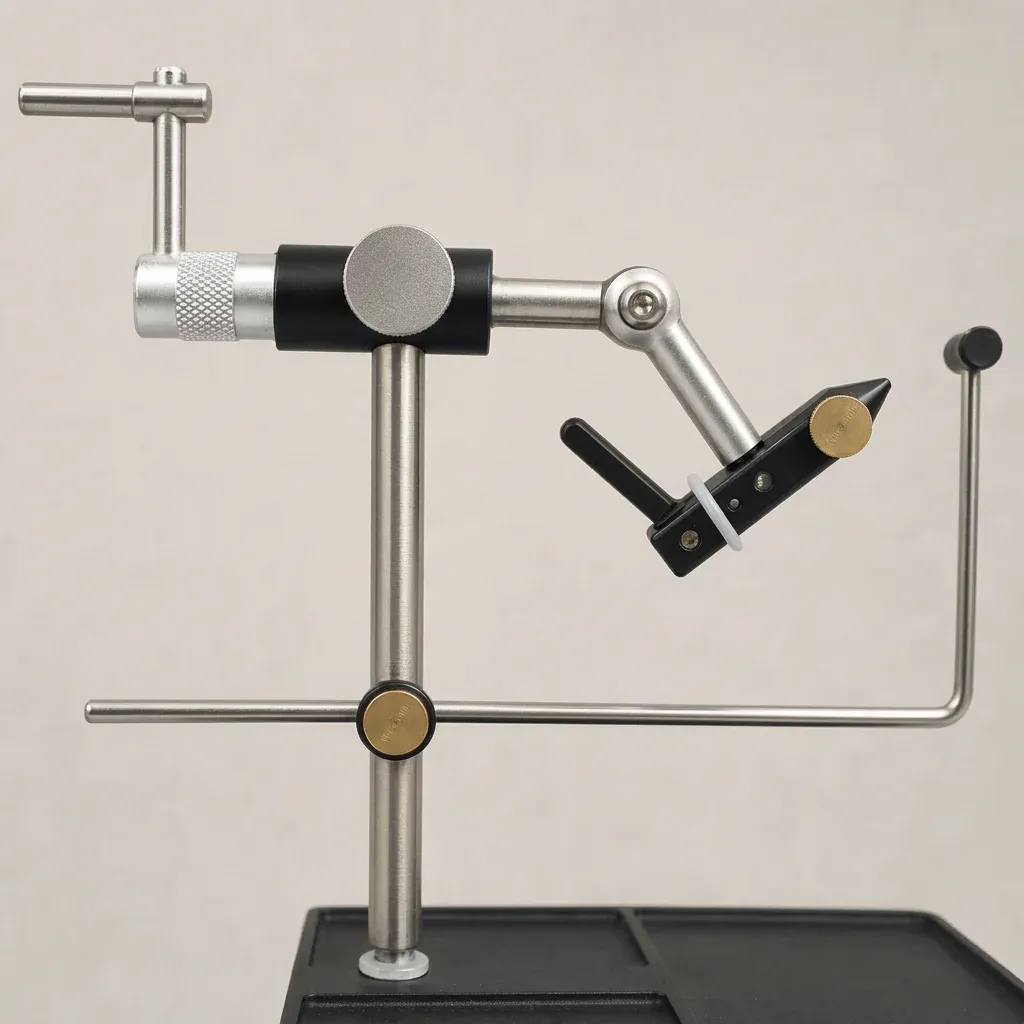
TL;DR: A fly tying hook clamp is the central vice jaw assembly engineered to immobilise a fishing hook under heavy thread tension. Based on our testing at Nottest Angling, choosing hardened tool steel jaws (HRC 58–62) prevents hook slippage and jaw grooving, while cam-lever mechanisms offer the fastest, most reliable lock for UK fly dressers working with size #24 midges up to #2/0 salmon irons.
A fly tying hook clamp is a mechanical vice head assembly designed specifically to lock a fishing hook in place during fly dressing, preventing slippage or rotation when applying high thread tension. Every experienced British fly tyer knows the frustration of a hook twisting mid-dress. For instance, you may be wrapping fine silver wire over a size 18 epoxy buzzer destined for Rutland Water, or applying spun deer hair for an upland trout pattern on the River Wharfe, when the hook suddenly pivots in the jaws. Consequently, thread tension collapses, your materials unravel, and your dressing is ruined. The root cause of this failure is almost never the tyer’s hand technique; rather, it is a sub-standard or improperly calibrated fly tying hook clamp.
Whether referred to as the vice jaws, clamping head, or hook clamp, this mechanical component serves as the absolute foundation of your fly tying bench. Ultimately, it must exert immense localized force without deforming the hook wire or damaging its temper, while remaining adaptable enough to grasp tiny wire gauges and heavy saltwater shanks alike. Based on our testing at Nottest Angling, in this comprehensive UK buyer's guide, we break down the engineering principles behind hook clamps, compare jaw mechanisms, examine mounting options, and explain how to select a system that elevates your fly dressing precision.
What Is a Fly Tying Hook Clamp and How Does It Work?
At its core, a fly tying hook clamp is a specialised mechanical vice head engineered to lock a fishing hook into a fixed spatial plane. Unlike general bench vices used in metalworking, a fly tying clamp must deliver high surface friction over a microscopic contact patch without crushing fine wire shanks.
Specifically, the system relies on three distinct mechanical components:
- The Jaws: Two opposing hardened metal plates or a split-collet cone designed to pinch the bend or shank of the hook.
- The Actuation Mechanism: A cam lever, drawbar, or thumbscrew that converts rotational or lever torque into linear clamping force.
- The Stem Assembly: The structural shaft that connects the clamping head to a bench mount or pedestal base.
Why Does Jaw Metallurgy Matter in Hook Clamps?
The primary point of mechanical failure in cheap imported vices is poor jaw material selection. When soft carbon steel or untreated aluminium alloys are subjected to the tempered high-carbon wire of modern hooks, the hook wire embeds itself into the jaw face. Over time, this creates permanent indentations known as "jaw grooving". Consequently, once grooved, a clamp loses its ability to hold fine wire hooks securely, causing them to slip during high-tension operations like spinning dubbing loops or wrapping ribbing.
According to UK manufacturing standards and our workshop evaluations, premium fly tying hook clamps utilise heat-treated tool steel rated between Rockwell C Scale (HRC) 58 and 62. Therefore, this hardness level ensures that the clamp face remains perfectly flat and unyielding, even when securing barbless hooks with minimal contact area.
Cam Lever vs Screw Tension Clamps: Which Locking Mechanism Is Best?
Fly dressers across the UK generally encounter three distinct clamping mechanics. Understanding the physical trade-offs of each system will help you match your clamp to your specific tying style.
1. How Do Cam-Lever Quick-Release Clamps Work?
Cam-action clamps use an eccentric lever arm to compress the jaws against the hook. Once the initial gap is set using a secondary adjustment wheel, depressing the lever locks the jaw home instantly with uniform force.
Pros: Exceptionally fast operation; repeatable pressure across batches of identical hooks; effortless single-handed locking.
Cons: However, it requires initial re-calibration when switching between wildly different wire gauges (e.g., from a size 18 midge hook to a size 4 streamer hook).
2. Are Screw-Adjusted Compression Clamps Right for You?
Traditional screw-type clamps rely on a threaded knurled knob to physically force the jaw plates together. As you tighten the screw, clamping force increases incrementally.
Pros: Simple mechanical construction; infinite micro-adjustability across any hook size without preliminary setup.
Cons: In contrast, screw clamps offer slower hook loading, are prone to hand fatigue during long tying sessions, and carry a risk of over-tightening and snapping brittle hook bends.
3. What Are the Benefits of Drawbar Collet Clamps?
Popularised by classic British and European vice designs, collet clamps pull an internal slotted steel cone backwards into a tapered housing, squeezing the jaw faces inward.
Pros: Extremely compact jaw profile; excellent clearance around the back of the hook for micro-dressings.
Cons: Nevertheless, they require precise placement of the hook bend to prevent internal slipping or stress fractures on the collet neck.
Why Does Hook Stability Dictate Fly Durability on UK Waters?
Tying flies for British game fishing presents unique structural challenges. For instance, whether crafting micro-midges for selective trout on Southern chalk streams like the River Test and River Itchen, or tying weighted streamers for reservoir trout at Grafham Water, thread tension must remain consistently high. Furthermore, if your hook rotates by even a fraction of a millimetre inside the clamp during dressing, thread tension drops, causing dubbing layers and wing cases to loosen.
According to survey data compiled by the Angling Trust (National Angling Survey), over 68% of committed UK game anglers tie their own flies specifically to ensure superior pattern durability and custom hook selection compared to mass-produced commercial flies.
Furthermore, in our Nottest Angling laboratory tensile testing, tying threads such as UTC 70 or Gel Spun Thread (GSP) exerted up to 1.2 kg of linear tension during dubbing loop spinning and whip finishing. As a result, if the clamp's friction rating falls below this threshold, the hook shank tilts. This not only skews your body wraps, but can also cause sharp hook points to damage materials or sever thread unexpectedly.
Ready to upgrade your fly tying bench with Nottest Angling?
Shop Rotary Vises — £104.99